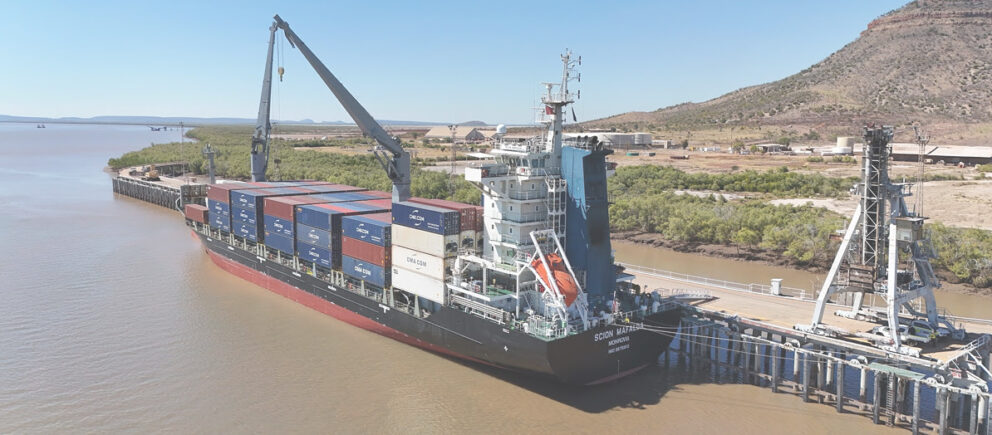

In order to understand any impacts port operations has on the surrounding marine and landside environments Kimberley Ports Authority has implemented a range of comprehensive environmental monitoring, and management programs to ensure compliance with permits and licenses.
Marine Monitoring
Routine marine monitoring includes marine sediment and water quality sampling and testing, and mangrove and benthic habitat surveys.
Marine Environmental Quality Sampling and KPA has been monitoring the port marine environment since 2018. The Marine Environment Quality Sampling and Analysis Plan (MEQSAP) provides a snapshot of the 2024 results.


Invasive Marine Pest Species Monitoring
KPA participates in the State Wide Array Surveillance Program (SWASP) with the Department of Fisheries to monitor for the presence of invasive marine pests. The SWASP involves the deployment of arrays at the wharf to monitor for growth and shoreline searches. The arrays are raised from the seabed and growth is tested twice a year.
Mineral Sands Part V licence monitoring
Since the commencement of mineral sands exports KPA has been undertaking noise, environment, and personal dust monitoring readings. The monitoring results will contribute to a report on the 2025 levels.

Fauna Protection
KPA maintains four Osprey nesting platforms on the Port of Broome wharf. These nesting platforms are designed to allow Ospreys to build nests above the port’s working zones. KPA works closely with Government departments to respond promptly to marine and terrestrial fauna incidents.
Land Management
Groundwater monitoring: water quality sampling and testing across a network of groundwater monitoring bores at the Port of Broome.
Clearing permits: The Port of Broome and surrounding port lands are located within an Environmentally Sensitive Area (ESA) under the Native Vegetation Clearing Regulations; as such, KPA and tenants need to comply with a stringent process for proposed clearing. All native vegetation clearing activities are referred to the Department of Water and Environment Regulation for assessment and permits obtained, where required.
Coastal Erosion: KPA has commissioned a Coastal Hazard Risk Management and Adaption Planning (CHRMAP) report.
The report will influence future port development and provides triggers on when to manage the risk of erosion along shoreline areas. A comparison shoreline monitoring program will be initiated every two to three years to ensure action is taken to protect port assets.