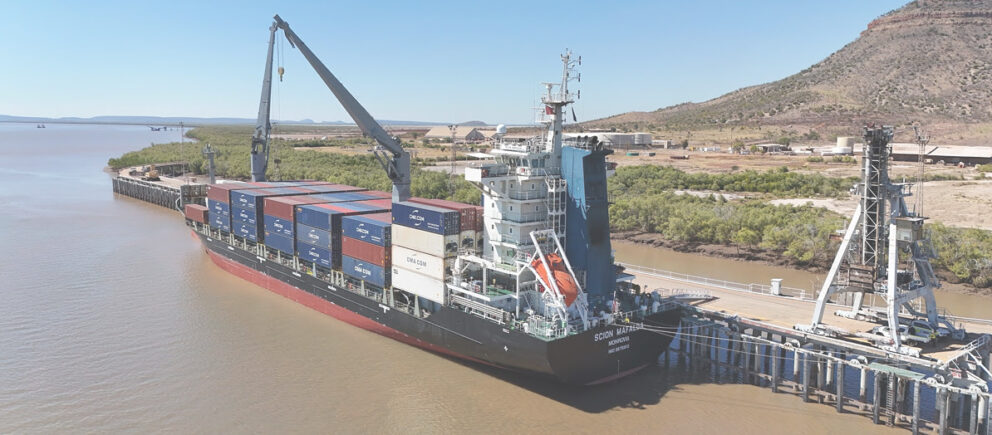

Cyclone Contingency Procedure
KPA’s Cyclone Contingency Procedure provides guidance on the expected response of KPA staff, and vessel crews in port during the approach and onset of a cyclonic or a severe weather event.
The Cyclone Contingency Procedure is reviewed by the Harbour Master prior to the cyclone season (November to April) each year and updated to reflect changes necessitated by ‘lessons learnt’ from previous cyclone seasons or by changes to the Port’s infrastructure or operational practices.
Port users are invited to raise proposed changes to the procedure with the Harbour Master.
Weather
The Kimberley region has a tropical climate with hot and humid summers and warm winters.
From October to April maximum temperatures average over 33C, while the overnight minimum is typically 26C in the wet/summer months. By contrast winters are mild, in July average maximum and minimum temperatures being 26.9C and 12.0C respectively.
Over 75% of the average annual rainfalls from January to March are associated with thunderstorms and tropical lows or cyclones. These weather systems can produce heavy rain in short periods. The unreliable nature of the occurrence and movement of thunderstorms and tropical systems result in rainfall being highly variable.
Tropical cyclones capable of strong winds, high seas and heavy rain can be experienced during the months from November to April but are most common in January and February.
Please use the links to the Bureau of Meteorology’s website for weather forecasts and tide information.
Tides and Tidal Streams
All four Kimberley Ports experience large tidal variations, and many port operations are scheduled around tide heights/movements. More details around tidal conditions may be found in the specific Port Handbooks
Tide charts are available at the following links:
Broome:
Tide Charts 2027
Derby:
Tide Charts 2027
Wyndham:
Tide Charts 2027
Yampi Sound:
Tide Charts 2027